


Cano de aço inoxidável
Zhejiang Mingli Management Co., Ltd. is a leading professional supplier of stainless steel pipes and pipe fittings. We have more than 30 years of experience in pipe fitting processing and sales, and have our own factory, so we can support the supply of large quantities of pipe fittings. In addition, we support OEM/ODM and can process according to drawings, also provide surface treatments such as sandblasting, sand rolling, and mirror surface treatment for pipe fittings.
Our factory covers an area of more than 10,000+㎡, equipped with 60+ sets of production equipment and 70+ sets of supporting molds. Our annual production capacity can reach 5,000+ tons to meet various pipe fitting ordering needs.
Our team has more than 30 years of experience in pipe fitting manufacturing and sales, and is online 24/7 to provide you with timely product consultation and customized design services.
Multi-transportation
Our production processes and stainless steel pipe fittings products strictly comply with industry guidelines and quality standards, and have passed ISO9001, DAS and TS certifications.
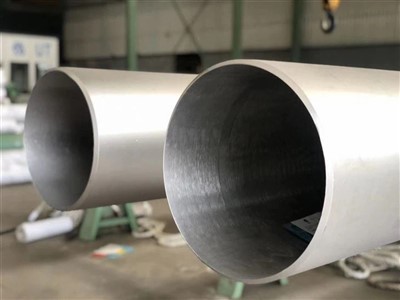


Stainless Steel pipes are the pipes used for carrying highly chemical gases, corrosive fluids etc. These pipes can also be called corrosive-resistant pipes. Stainless steel pipes are made from a combination of chromium, nickel, and other alloying elements, come under the category of high-quality alloy steel as it contains more than 8% elements in it. In other words, an alloy metal pipe is coated with a thin layer of chromium from the outside for protection. Due to this, the internal environment remains unaffected and unharmed by the external environment.
Their materials have high low-temperature toughness, work hardening rate and ductility, and can be used to produce pipes of different sizes and shapes through various processes.


For example, sanitation is a prime consideration in the food and beverage and medical device industries. Stainless steel, in addition to its corrosion resistance, is celebrated because it is easy to clean and doesn't tarnish. The alloy ASTMA270 is a popular choice for sanitary piping.

The most popular and widely used form of stainless steel pipe on the market are standard stainless steel pipes. 304 and 316 are used for applications in typical contexts in houses, buildings, etc. for ornamental purposes.
Small-diameter gasoline lines and hydraulic systems both employ this type of Pipe. They are built in broad diameter and can be welded according to requirements and specifications. Such pipes are constructed of an austenitic and ferritic steel type sometimes known as the nickel and chromium or solid chromium mix.
Stainless Steel Pipes made of nickel and chromium are utilized in all aircraft applications because it is both heat- and corrosion-resistant. Stainless Steel with low carbon is preferred for welded stainless steel Pipes and components. Aerospace structural material produced following Aerospace Material Specifications (AMS) or Military Specifications is utilized for applications requiring both seamless and welded pipes.
Pressure stainless pipes are designed to withstand intense pressure and heat. They can be welded to specific specifications and have a large diameter. These pipes are constructed from an austenitic and ferritic type of steel, also known as a nickel-chromium alloy or solid chromium.
Stainless Steel Mechanical Pipes are utilized in bearing and cylinder applications. For applications requiring mechanical pipes, grades ASTMA511 and A554 are typically used. These mechanical piping are available in a variety of shapes, including square, rectangle, and circular.
Austenitic stainless steel is non-magnetic and has very high corrosion resistance:
- Austenitic stainless steel possesses a fine-grain structure known as face-centered cubic (FCC), where the atoms are arranged in a closely packed cubic lattice.
- Examples of austenitic stainless steel include Type 304, 304L, 316, and 316L. These grades are widely utilized in various industries and offer specific compositions and properties tailored to specific applications.
- Ferritic stainless steel has a coarse-grain structure known as body-centered cubic (BCC), where the atoms are arranged in a cubic lattice with a single atom at the center of each cube.
- Ferritic stainless steel is commonly used in applications such as marine equipment, petrochemical plants, heat exchangers, and furnaces.Type 409, 430, 439, 444, and 446 are examples of Ferritic stainless steel.
- Martensitic stainless steel transforms its crystallographic structure during heat treatment. It changes from a face-centered cubic (FCC) structure to a body-centered cubic (BCC) structure, resulting in a distorted lattice structure.
- Martensitic stainless steel is not suitable for applications requiring high corrosion resistance or in corrosive environments. Type 405, 410, and 420 are examples of Martensitic stainless steel.
- Very high strength-to-weight ratio with good corrosion resistance.
- 17-7PH, 17-4PH are examples of Precipitation Hardened stainless steel.
Duplex and Super Duplex stainless steel contain both Austenite and Ferrite in the microstructure. This dual-phase structure provides a combination of properties from both austenitic and ferritic stainless steels.
- The dual-phase microstructure of Duplex and Super Duplex stainless steel provides enhanced resistance to these forms of corrosion, making it suitable for applications in harsh environments, such as seawater.
- EX- UNS S32205, S31803, and S32760 are Duplex and Super Duplex stainless steel examples.
Another step to get the correct steel pipes is to determine the grade of steel you need. You can base on international standards to pick out the most suitable steel pipes for the projects. The ASTM and ASME standards usually have piping specs that help you a lot in showing you which grades will do the best job. Besides, you can also count on SAE & AISI - the two other organizations that are well known for steel pipe grades. Their numbering system simplifies a lot of the more complex classifications of steel pipes, however, not the whole specifications when choosing the correct pipes.
The customization options of steel pipes are also an important factor to consider when buying steel pipes. Of which, there are the two most popular options of customization: seamless or welded. However, most welded pipes are more cost-effective than seamless, and it becomes a huge thing to consider when you buy in bulk.
Whatever you buy, buying in bulk always gets you a better price. Besides, you might have the added benefit of mixing steel pipes length and size or getting customize-to-need pipes; which you will never have once you buy in small quantities.


If you see minor damages early, there are some first-aid repairs you can do to your pipes. You can seal holes and cracks with plumber putty or specialized bandages and clamps. This can serve as short-term repairs while you wait to schedule a professional consultation.
To get the best value for your investment, we recommend choosing high-quality materials for your pipe installation. There are specific types of pipes for every application. To lengthen the life of your steel pipes, it is also recommended to apply protective coatings especially if you're going to use it with water or put it in contact with other metals.


